
How to Choose a Groove Copybook Manufacturer for Your Brand
For stationery distributors, educational suppliers, private-label brands, and e-commerce sellers, choosing a Groove Copybook Manufacturer is not simply about comparing quotations. A sample may look similar to another supplier's product, yet differences in paper, groove quality, printing, ink performance, and production control can become obvious after the product is used repeatedly.
For buyers developing their own stationery line, supplier selection should therefore start with the manufacturing process rather than the catalog photograph.
Start With the Groove, Not the Cover Design
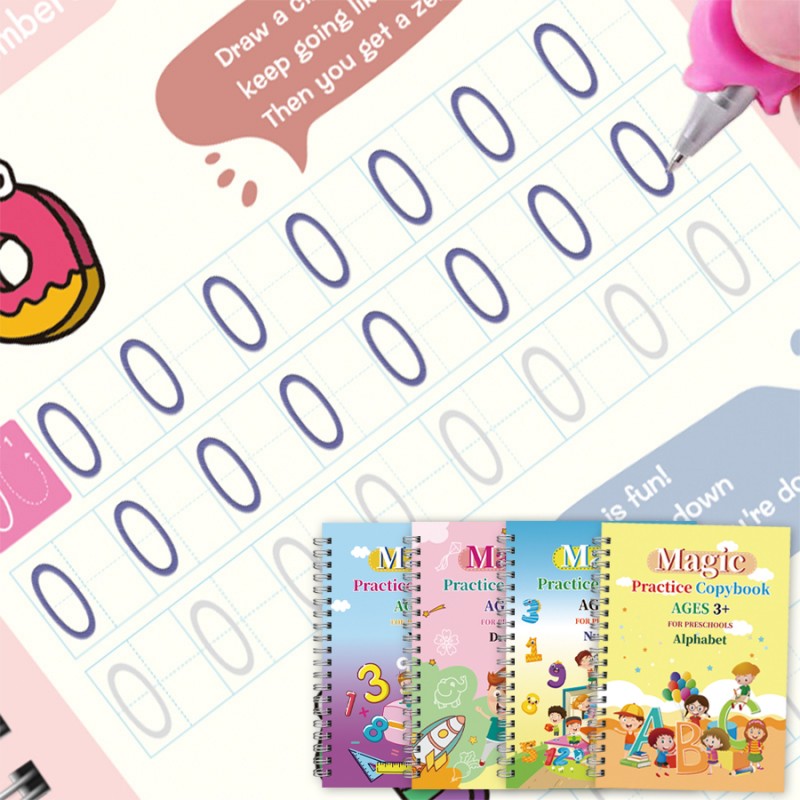
The three-dimensional groove is the defining feature of a Groove Copybook. It is also one of the first things buyers should inspect when evaluating a supplier.
A good groove should be clear enough to guide the writing movement, while remaining comfortable for repeated use. Consistency is equally important. If groove depth or shape changes from page to page, the user experience can become inconsistent.
TotoFish uses CNC processing for groove production and currently describes its standard groove depth at approximately 0.35 mm. The company focuses on keeping the groove structure consistent with the printed writing path so that the physical guide and the educational content work together.
For buyers, a practical test is simple: run a pen through several different pages and check whether the writing path feels consistent from one page to another.

Check Whether the Paper Matches the Product's Purpose
A reusable copybook places more demands on paper than an ordinary printed workbook.
The material must be firm enough to maintain the groove while remaining suitable for writing and handling by children. Ink resistance is another consideration, especially when a product is supplied with reusable or fading pens.
TotoFish currently specifies 250g Grade-A white cardstock for its Practice Copybook range, while its broader educational stationery production also includes heavier 350–400GSM board for selected products.
There is no single paper specification that is automatically right for every market. Buyers should discuss paper weight together with page structure, intended use, product positioning, and target price.
Printing Accuracy Should Be Evaluated Together With Grooving
For a Groove Copybook, printing and groove processing cannot be treated as two completely separate steps.
The printed letter, number, or drawing guide needs to correspond closely with the actual groove. Misalignment can make the product confusing for young users and can also affect the perceived quality of a private-label product.
Wenzhou Qide Cultural and Creative Co., Ltd. lists Heidelberg 4-color and 5-color printing equipment and a CPC color control system as part of its production capabilities. The company also combines printing with CNC groove processing and automated finishing.
This type of integrated manufacturing can be particularly important when buyers provide their own artwork or educational content.

Ask How the Manufacturer Handles OEM Development
A supplier that can produce a standard copybook is not necessarily ready for OEM production.
Private-label buyers may need different languages, fonts, educational themes, handwriting styles, page layouts, sizes, covers, or packaging. The supplier needs to understand these requirements before mass production begins.
TotoFish supports customization of content, dimensions, materials, languages, and handwriting styles, including options such as English, French, Arabic, D'Nealian, and Cursive. Its service system also includes private-label and custom design options.
The more customized the project, the more important sample approval becomes.
Look at the Complete Product, Not Just the Copybook
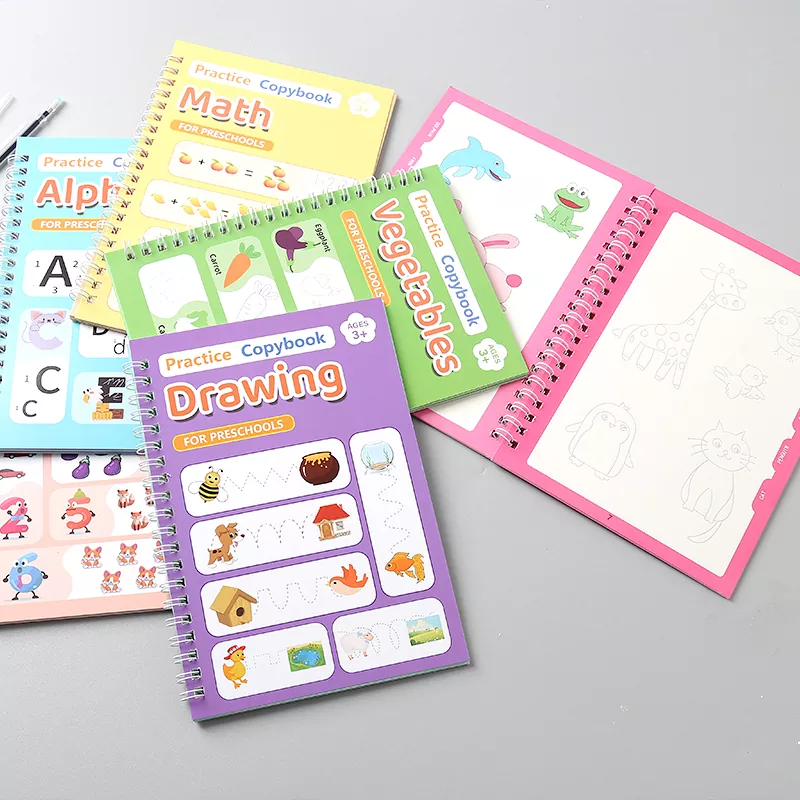
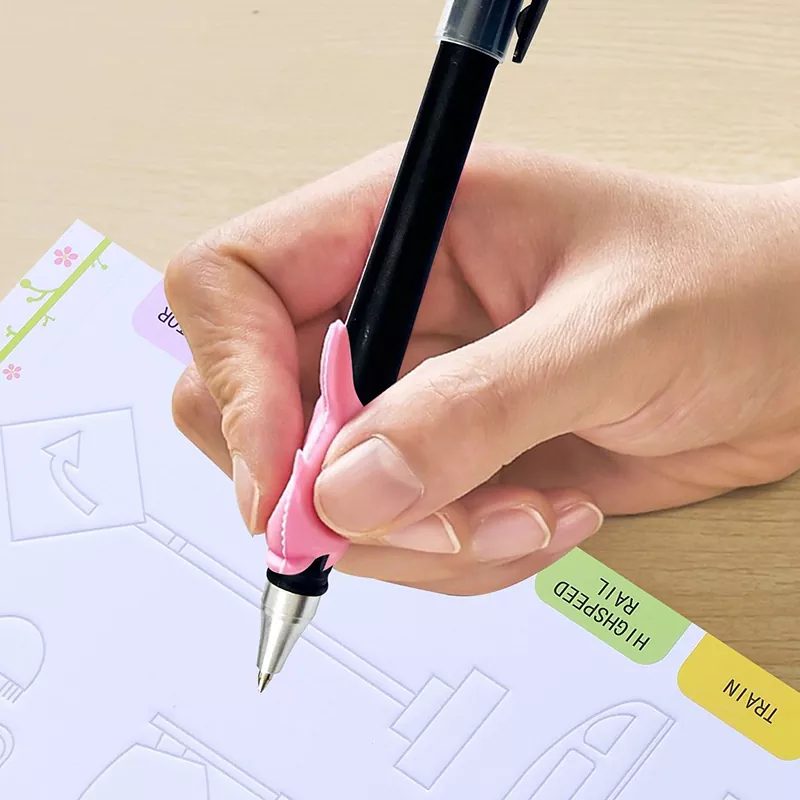
Many Groove Copybooks are sold as sets rather than as books alone. The writing pen, replacement refill, grip, and packaging can all affect the final customer experience.
TotoFish offers complete kits including books, pens, refills, and grips, with options for retail and Amazon FBA packaging. The company currently lists private-label projects starting from 1,000 units and customized design projects from 3,000 units, depending on the scope of customization.
For an overseas buyer, having these components handled by one supplier can make product development and purchasing easier.
Quality Control Needs to Match the Real Risks
A supplier's QC system should focus on the problems that could actually affect the finished product.
For Groove Copybooks, that means checking groove consistency, print quality, paper condition, binding, pen compatibility, fading performance, and the accuracy of customized artwork.
This is particularly important for e-commerce brands. A quality problem that seems minor during sampling can become a much bigger issue after several thousand units reach customers.
The Best Supplier Is Not Always the Lowest-Cost Supplier
Price remains important in wholesale purchasing, but the lowest quotation does not necessarily represent the lowest total cost.
If a supplier can provide consistent manufacturing, faster sampling, customized content, complete accessories, and finished packaging, the overall product development process can become much easier.
For a brand building a long-term stationery category, supplier capability should therefore be evaluated across quality, communication, customization, production, and after-sales support.
What Overseas Buyers Should Ask Before Placing an Order
Before selecting a Groove Copybook manufacturer, buyers should be able to answer several basic questions:
Can the manufacturer provide a physical sample?
Can the groove specification be controlled consistently?
Does the printed design align with the groove?
Can the supplier customize content and language?
Can the writing tools and packaging be supplied together?
What documentation is available for the target market?
These questions usually tell a buyer much more than a product catalog alone.
Building a Better Product Starts With the Right Manufacturer
A Groove Copybook is the result of several manufacturing processes working together. Paper, printing, groove processing, ink, binding, packaging, and educational content all influence the final product.
For Wenzhou Qide Cultural and Creative Co., Ltd., the focus is not only on producing finished copybooks but also on supporting international buyers with customized educational stationery solutions under the TotoFish brand.
For a new private-label project, the most practical starting point is usually a carefully developed sample. Once the physical product meets the required standard, the transition to mass production becomes much more predictable.

Related News
- How to Source Non-Toxic & Leak-Proof Watercolor Coloring Books: A Factory Quality Control Guide
- Exhibition Recap | TotoFish Shines Bright at the 34th Shenzhen International Gifts and Home Products Fair
- OEM Groove Copybooks: What Should Overseas Buyers Prepare Before Production?
- 3D Groove Copybook vs. Traditional Handwriting Workbook: What Buyers Should Know
- What Makes a Good Practice Copybook? Insights from a Custom Manufacturer
- Complete Guide to Groove Calligraphy Copybooks: Matching Groove Depth & Ink Viscosity from Principles to Practice
Leave me a message