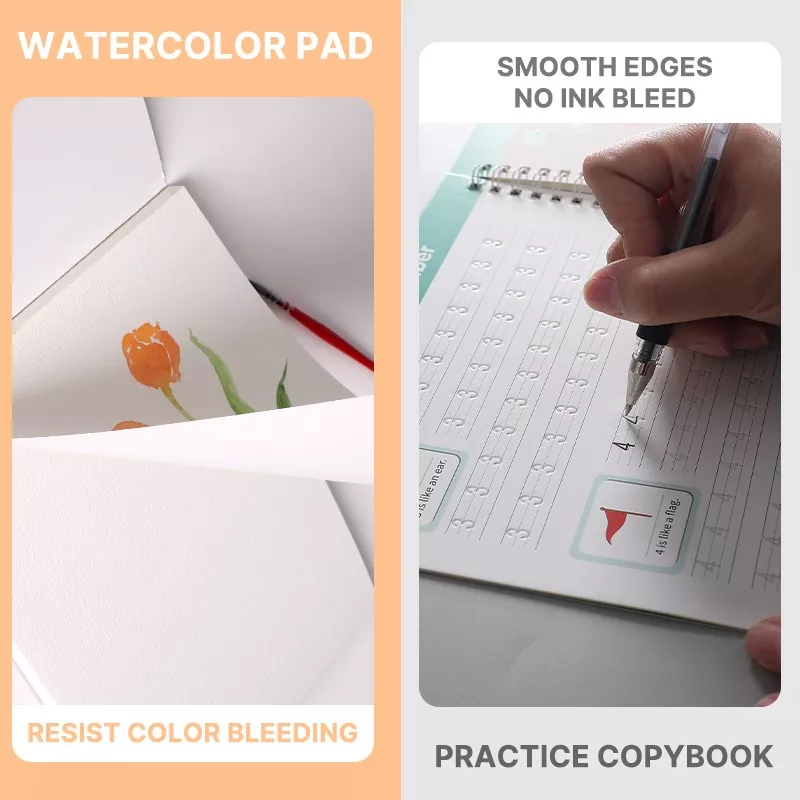

Complete Guide to Groove Calligraphy Copybooks: Matching Groove Depth & Ink Viscosity from Principles to Practice
Introduction: Why Precise Groove & Ink Calibration Matters
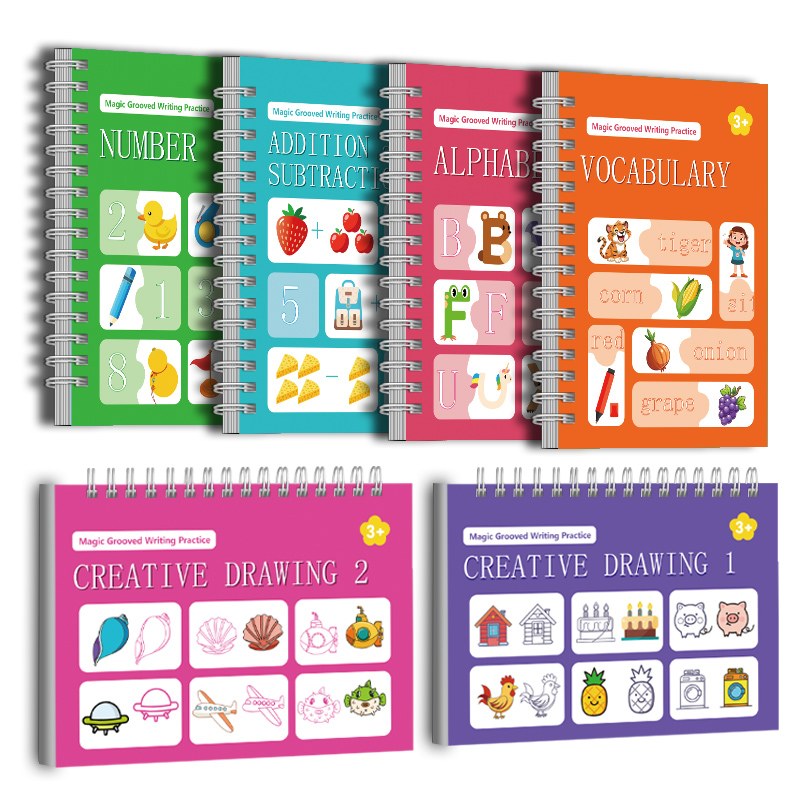
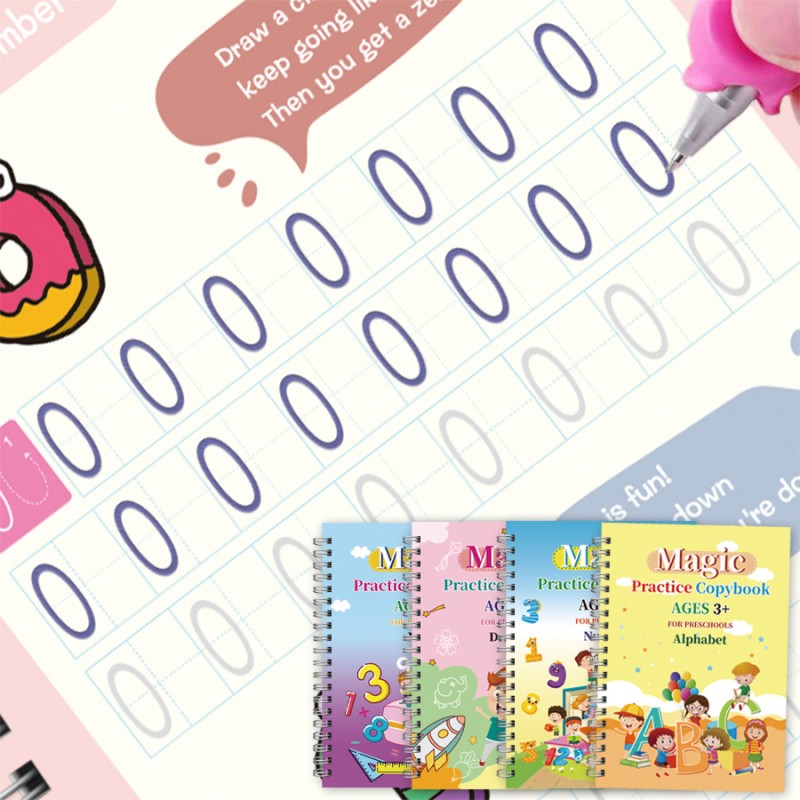
In the global stationery and educational supplies market, 3D groove calligraphy copybooks (often paired with magic disappearing pens) have surged in popularity. However, many importers and educational brand owners encounter common product quality complaints:
● “The ink runs out too fast or bleeds through the page.”
● “The groove is too shallow to guide the child's pen properly.”
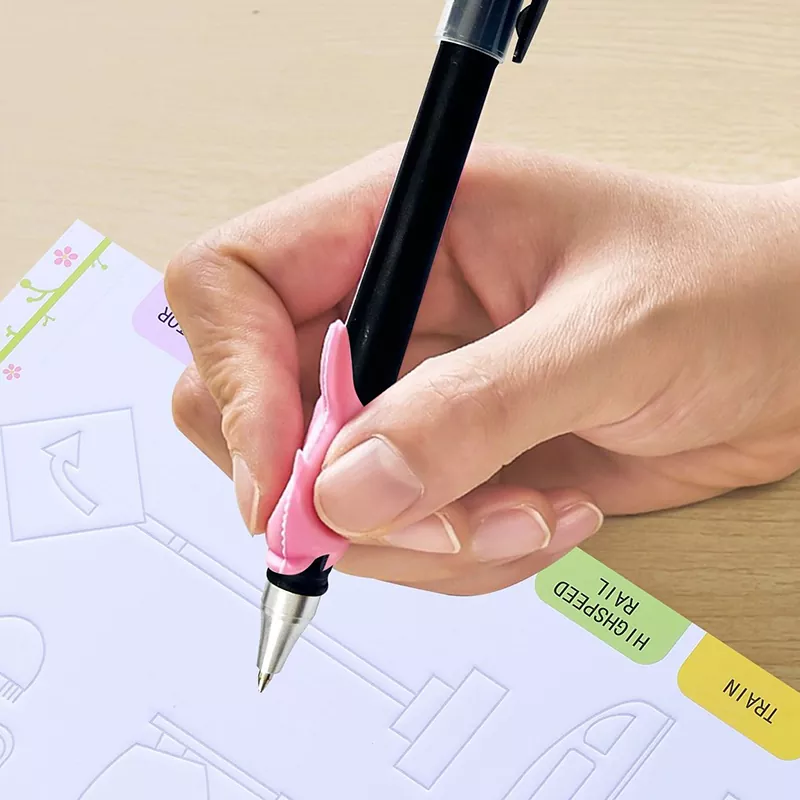
● “The pen nib gets stuck in the groove or leaves uneven tracks.”
The root cause of these issues lies in a lack of precise engineering balance between Groove Depth (Physical Guidance) and Ink Rheology/Viscosity (Fluid Dynamics). Just as industrial fluid systems require accurate calculations to ensure smooth flow, manufacturing high-performance groove copybooks requires a systematic approach.
Whether you are developing a new line of magical practice copybooks or sourcing reliable OEM/ODM suppliers, this comprehensive guide breaks down the core parameters, calculation methods, and selection practices you need to know.
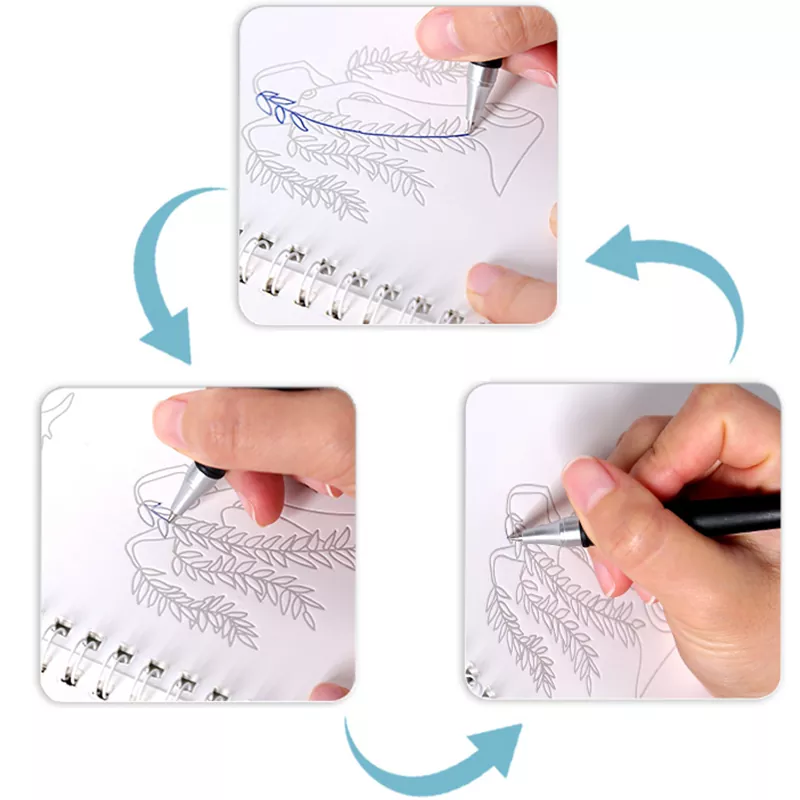
Part 1: What is the "Groove-Ink Dynamics"?
To achieve the ideal writing feedback—where a child’s pen tip stays naturally within the track while the disappearing ink fades cleanly without smudging—four critical components must be balanced:
|
Parameter Component |
Technical Description |
Impact on User Experience |
|
1. Physical Groove Depth (Dg) |
The vertical depth (in mm) pressed into the heavyweight paper. |
Determines tactile guidance and pen nib trajectory stability. |
|
2. Ink Viscosity & Capillary Pressure (Pc) |
The internal fluid resistance and surface tension of the disappearing ink formula. |
Controls ink flow rate, drying time, and anti-bleeding performance. |
|
3. Writing Velocity & Friction Loss (Hf) |
The drag coefficient generated between the metal pen tip and the paper groove surface. |
Prevents pen scratching, paper tearing, or uneven ink output. |
|
4. Paper GSM & Static Elevation (Sp) |
The density, thickness, and porosity of the paper substrate. |
Prevents ghosting and ink saturation on the reverse side of the page. |
Part 2: Step-by-Step Practical Calculation Example
Let's analyze a real-world manufacturing case for a Standard 3D Preschool Magic Practice Notebook.
Step 1: Determine Ideal Groove Depth (Dg)
● Standard Pen Tip Diameter: 0.5 mm or 0.7 mm refills.
● Golden Ratio Formula: Dg = Tip Radius x (0.8 to 1.2)
● Calculation: For a 0.5 mm nib (Radius = 0.25 mm), the optimal groove depth ranges between 0.30 mm and 0.38 mm.
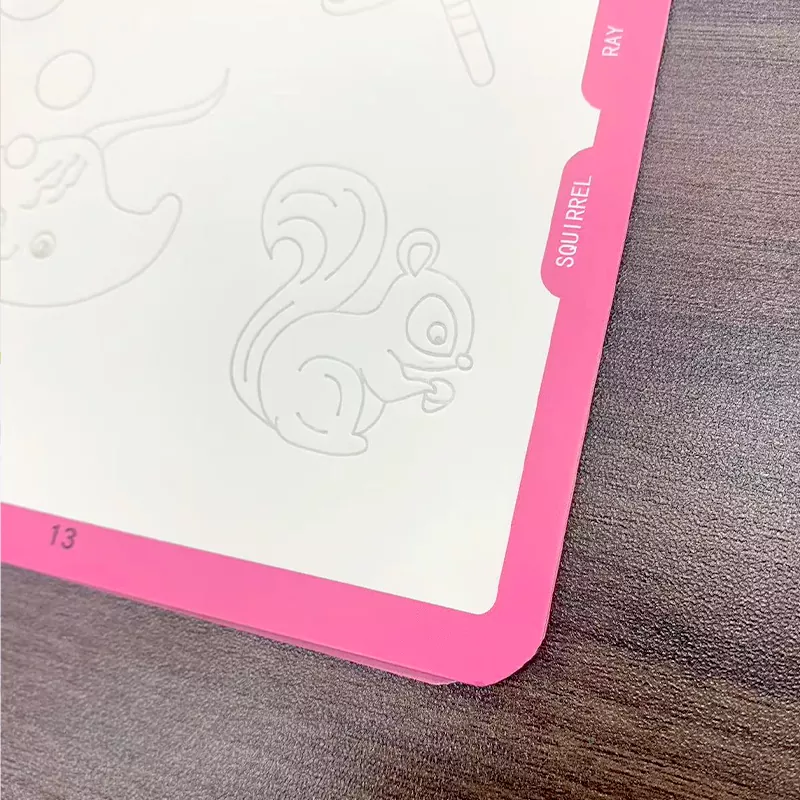
▷ Too shallow (less than 0.2 mm): Fails to guide the pen tip.
▷ Too deep (more than 0.5 mm): Damages paper fibers, causing ink leakage to the back.
Step 2: Calculate Ink Flow Rate vs. Paper Absorbency
Disappearing ink utilizes a thermo/photo-sensitive complex suspended in a water-based solution.
● Target Disappearing Time: 20 to 30 minutes.
● Viscosity Requirement: Must be maintained at 3.5 - 5.0 mPa·s at 25°C.
▷ This ensures the ink flows steadily into the pressed groove without lateral capillary spreading across paper fibers.
Step 3: Factor in Safety & Non-Toxicity Compliance
No matter how precise the writing parameters are, educational products intended for children must strictly comply with chemical safety standards.
● LHAMA / ASTM D-4236 (US Market): Ink formulas must undergo toxicological risk assessments.
● amfori BSCI Audit (EU/Global Market): Ensuring ethical manufacturing and compliant working conditions.
Part 3: Common Sourcing Misconceptions & Avoidance Strategies
|
Misconception |
Correct Engineering Understanding |
|
❌ "Deeper grooves are always better for children." |
✅ Excessive depth causes paper perforation. Heavy grooving damages paper structure, leading to ink bleeding and reduced page lifespan. |
|
❌ "Any ballpoint refill works in grooved books." |
✅ Regular oil-based ink clogs groove corners. Specially formulated disappearing ink with ASTM D-4236 non-toxic certification is required. |
|
❌ "Thicker paper alone prevents ink bleed." |
✅ Paper pressing density matters more. 250–300 GSM specialized ivory board combined with proper groove pressing achieves optimal results. |
Conclusion: Engineering Precision Meets Creative Writing
Manufacturing high-quality 3D groove copybooks is more than just paper printing—it requires precise physical and fluidic calibration. Balancing groove depth, paper density, and non-toxic ink formulation is the secret to delivering smooth, reusable, and safe writing experiences for young learners.
As an ISO-certified and amfori BSCI-audited stationery manufacturer, Wenzhou Qide Cultural and Creative Co., Ltd. (TotoFish) combines advanced 3D embossing precision with SGS LHAMA / ASTM D-4236 non-toxic certified disappearing ink.
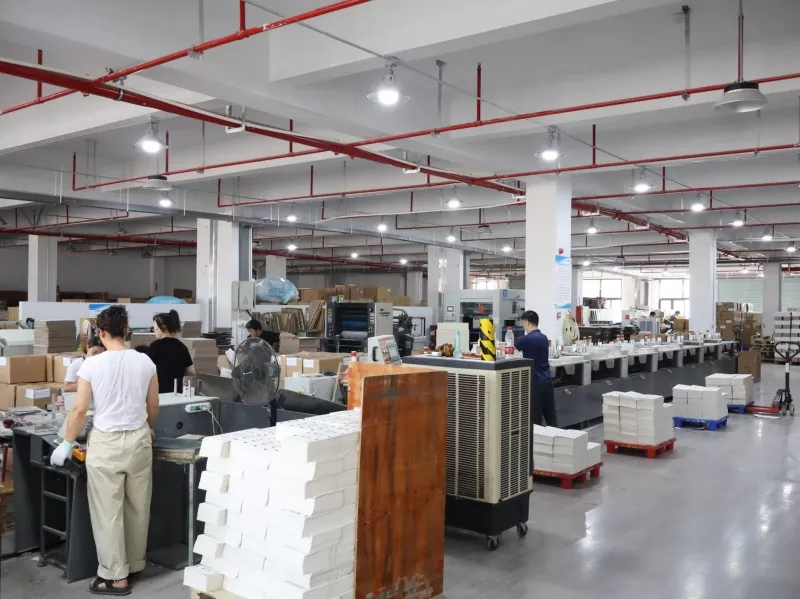
Looking to customize 3D Groove Calligraphy Sets or Magic Disappearing Pens for your market?
Contact Our OEM/ODM Engineering Team Today for Free Samples and Technical Consultation.
Related News
- How to Source Non-Toxic & Leak-Proof Watercolor Coloring Books: A Factory Quality Control Guide
- Exhibition Recap | TotoFish Shines Bright at the 34th Shenzhen International Gifts and Home Products Fair
- OEM Groove Copybooks: What Should Overseas Buyers Prepare Before Production?
- 3D Groove Copybook vs. Traditional Handwriting Workbook: What Buyers Should Know
- How to Choose a Groove Copybook Manufacturer for Your Brand
- What Makes a Good Practice Copybook? Insights from a Custom Manufacturer
Leave me a message