
A B2B Guide to Sourcing High-Quality Children’s Sketchbooks: Deciphering Paper Grade, Binding Durability, and Market Trends
As an educational stationery procurement manager or cross-border e-commerce seller, you likely frequently encounter customer complaints like: “Markers bleed through instantly, water warps the paper, artwork yellows over time, or spirals open causing pages to detach.” These seemingly minor issues often destroy consumer trust in your brand.
A sketchbook may appear to be the simplest generic blank book, but to meet the high-intensity demands of the children’s educational market, the technical specifications are surprisingly robust.
Operating as a specialized manufacturer with 15 years of experience in children's educational paper products, TotoFish (Wenzhou Qide Cultural & Creative Co., Ltd.) breaks down the essential physical and engineering benchmarks B2B sourcing managers must verify before issuing a purchase order.
1. Physical Specifications: The 'Tooth' and 'Sizing' of Paper Drawing Grades
The core value of any sketchbook is its paper. Low-cost, generic versions often use standard wood-free copy paper (Copy Paper Grade, as known on factory lines), which fails under repeated friction from drawing tools and cannot manage moisture.
In TotoFish’s paper testing lab, we strictly maintain these technical parameters:
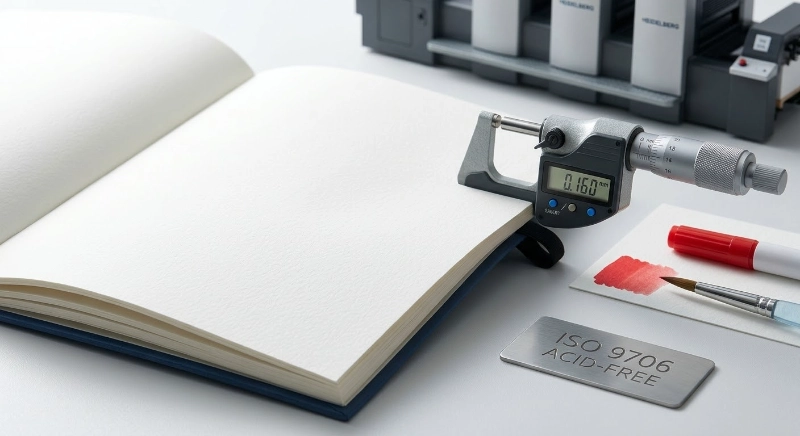
- 160gsm Virgin Wood Pulp Drawing Cardstock (For Bestselling Lines): Regular copy paper is only 70–80gsm. For high-velocity items, such as our 160gsm premium drawing book that must withstand markers, oil pastels, and light wet-media usage, using a ≥160gsm virgin wood pulp stock is non-negotiable. This weight provides the necessary tensile strength to absorb moisture and resist fiber damage from friction.
- Surface Sizing Barrier Treatment: Drawing stock must undergo specialized sizing treatment applied during paper milling. This helps control the absorption rate, preventing pigment feathering and bleed-through while increasing the overall resilience of the paper surface.
- Acid-Free Certification (ISO 9706 Standard): This is a critical technical consideration. If paper contains acidic substances, it may oxidize, yellow, or become brittle over time, and pigment colors may shift. For institutional educational use or long-term artwork preservation, request relevant acid-free test reports and verify compliance with the applicable standard.
All drawing paper grades used in our sketchbooks produced in our factory undergo wear-and-tear testing to evaluate durability.
2. Binding Durability: Keeping Pages Detach-Free Under Rigorous School Usage
Sketchbooks are frequently refolded, opened flat to 180 degrees, or even flipped 360 degrees for outdoor sketching. The binding structure directly influences the product’s service life.
| Binding Type | Factory Technical Features & Potential Issues | Appropriate Market Scenario |
|---|---|---|
| Hardcover Sewn Binding (Flat-Lay) | Uses thread-sewing technology to support durable page attachment and a flat opening. Actual lay-flat performance depends on the binding construction. Potential issue: more complex production and higher cost. | High-end gift sets, field sketching, and projects requiring wide panoramas. |
| Perfect Binding (Generic Glue Binding) | A straightforward binding process. Depending on adhesive quality and spine construction, the book may not lie completely flat and may experience page detachment after repeated folding. | Budget-friendly stationery and entry-level sketchbooks. |
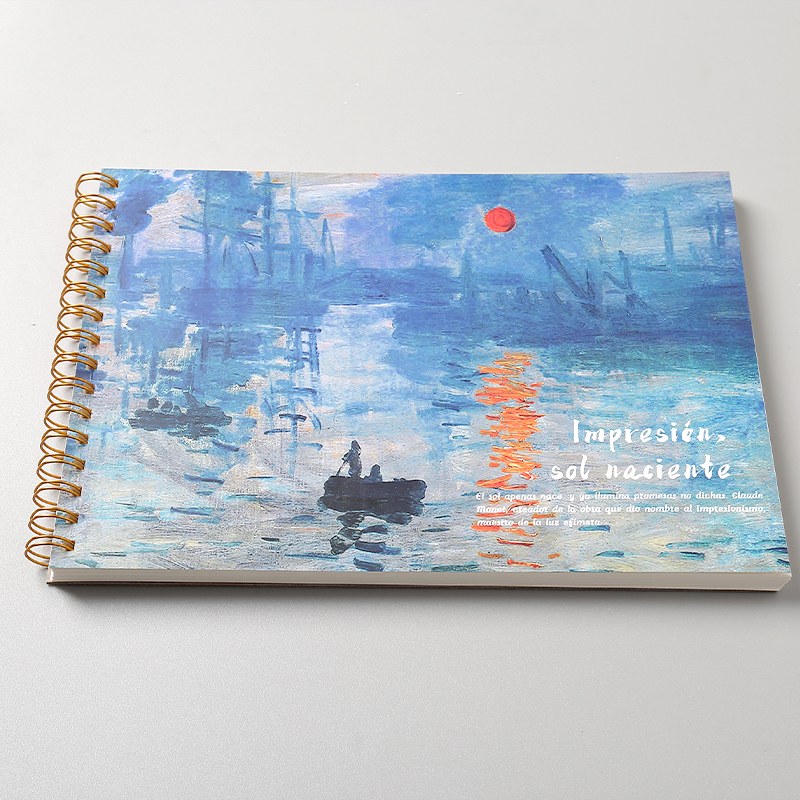
| Wire-O or Double-Loop Spiral Binding | Uses a formed metal coil to support flexible page turning and flat opening. Wire diameter, loop alignment, and binding strength should be checked to reduce snagging and page detachment. | Classroom settings, portable sketching, and high-volume stationery products. |
When producing bulk educational orders, we audit the metal spiral wire’s bending strength and alignment precision to help ensure a smooth page-turning experience for children.
3. Deep B2B Customization (OEM/ODM): Moving Beyond Generic Offerings
In highly competitive e-commerce and retail environments, generic sketchbooks can struggle to differentiate themselves. As a specialized manufacturer, TotoFish provides private-label customization solutions for educational stationery brands.
- Cover Material & Finishing: Customization options range from 300gsm softcover cardstock to rigid 2mm composite grayboard hardcover covers. Surface finishing options include matte lamination, spot UV, and foil stamping.
- Private Label Logo Branding: Custom branding options include multi-color printing and foil-stamped logos on covers and, where suitable, inner pages.
- Multi-Language Character Typography: Custom character and stroke layouts can support German, French, Arabic, Spanish, cursive writing, and numbers, subject to product specifications.
Anchor Your Educational Supply Chain with an Audited OEM Factory
Global brand owners should verify factory equipment, production capabilities, and social compliance rather than relying solely on general supplier claims. TotoFish operates a 12,000+ sqm automated plant equipped with Heidelberg offset presses and backed by BSCI social audits, with a reported monthly production capacity of over 2,000,000 units.
Visit our TotoFish Factory Strength Page to explore our manufacturing setup, or contact our sales engineering team to request sample kits and OEM quotation specifications for your next collection.
Related News
- How to Source Non-Toxic Kids Coloring Books: A B2B Printing Quality & Safety Compliance Guide
- How to Source 3D Magic Groove Copybooks: A B2B Quality & Technical Guide for Educational Brands
- How to Source Non-Toxic & Leak-Proof Watercolor Coloring Books: A Factory Quality Control Guide
- Exhibition Recap | TotoFish Shines Bright at the 34th Shenzhen International Gifts and Home Products Fair
- OEM Groove Copybooks: What Should Overseas Buyers Prepare Before Production?
- 3D Groove Copybook vs. Traditional Handwriting Workbook: What Buyers Should Know
Leave me a message