
When reviewing international RFQs, our engineering team frequently sees buyers misled by low-ball quotes from trading intermediaries—only to face retail returns, negative reviews, or customs detentions once the cargo reaches overseas ports.
Drawing on 15 years of export manufacturing experience inside our 12,000 sqm automated facility, TotoFish (Wenzhou Qide Cultural & Creative Co., Ltd.) exposes the five most expensive sourcing myths in educational paper products.
1. Myth: Identical Cover Designs Mean Low-Cost Quotes Deliver the Same Quality as Source Factories
Factory Truth
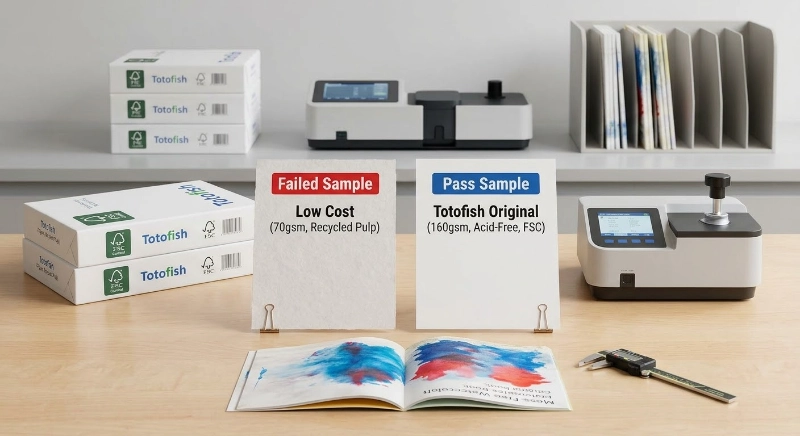
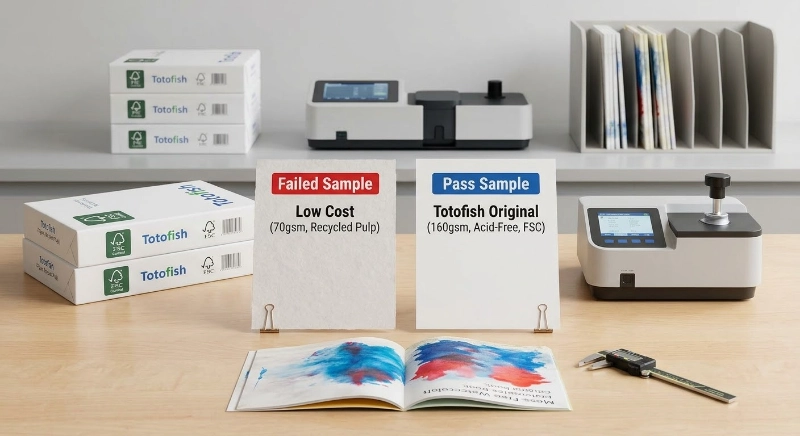
In paper stationery, 80% of production cost is hidden inside raw wood pulp purity and paper density. Low-tier workshops routinely substitute bleached recycled grey pulp for virgin stock, resulting in rough surfaces that pill and tear under wet markers. At Totofish, our student sketchbooks utilize ≥160gsm virgin acid-free wood pulp paper (certified to ISO 9706 standards), guaranteeing artwork remains crisp without yellowing for decades.
2. Myth: Every Printer Claiming "Eco-Friendly Printing" Uses Genuine Soy-Based Inks
Factory Truth
True plant-based soy inks carry significantly higher raw material costs than petroleum-based industrial inks. Some vendors blend trace amounts of soy oil into conventional ink just to claim "Soy Ink" on packaging, leaving high VOC (Volatile Organic Compound) odors upon unboxing. Equipped with Heidelberg 5-color offset presses, Totofish prints our entire kids coloring books line with 100% food-grade soy-based inks, delivering zero VOC emissions and strict compliance with EN71-3 and ASTM D-4236 safety standards.
3. Myth: Any Embossing Press Can Produce Functional 3D Magic Groove Copybooks
Factory Truth
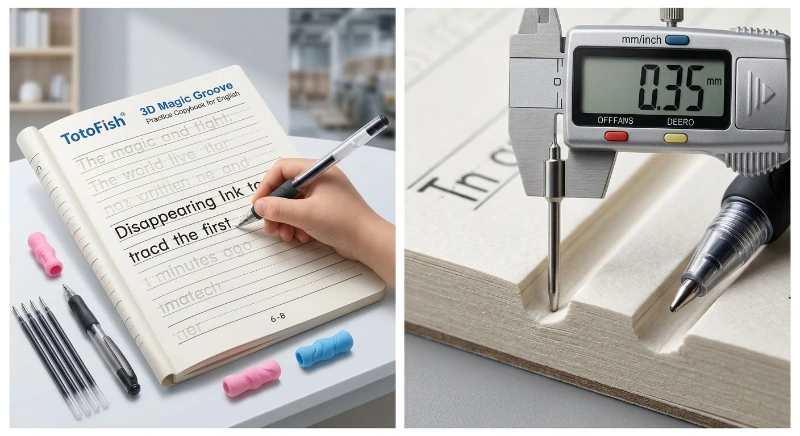
Precision groove molding requires micron-level thermal and pressure calibration. Grooves shallower than 0.25mm fail to guide a child's pen tip, while grooves deeper than 0.45mm fracture paper fibers and cause rear-side bulging. Totofish locks indentation depth at a 0.35mm golden standard paired with 250gsm–300gsm virgin white cardstock, ensuring our 3D magic groove copybooks withstand over 1,000 writing cycles without collapsing.
4. Myth: Printing Solid Paint Blocks onto Standard Paper Creates a "Mess-Free" Watercolor Book
Factory Truth
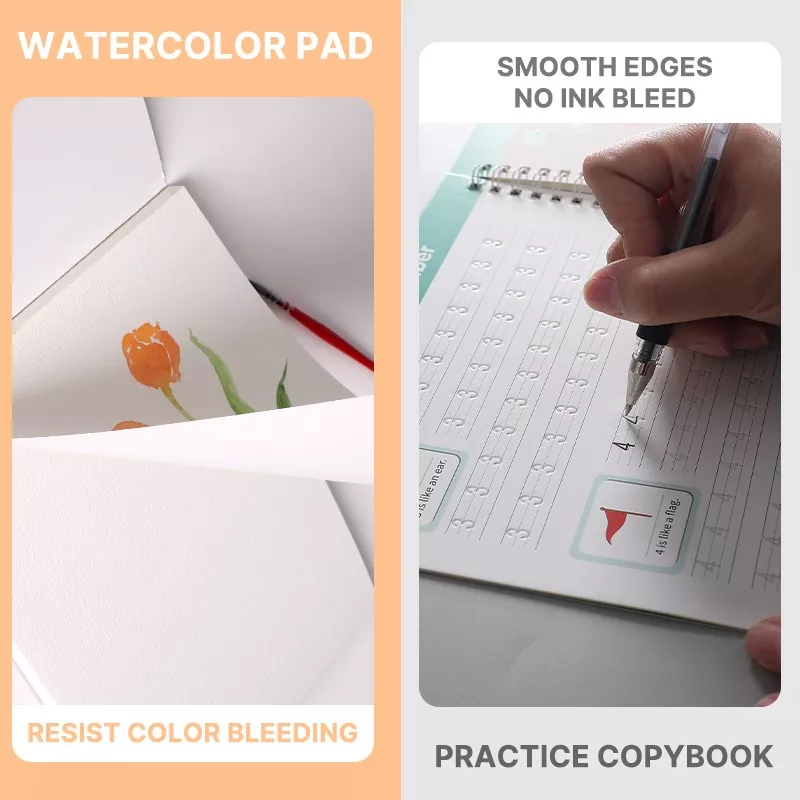
Without a engineered rear barrier coating, portable watercolor books become a stain hazard. Standard paper allows wet pigment to bleed directly onto underlying pages and tabletops. Our mess-free watercolor coloring books incorporate a reverse polymer barrier coating alongside rapid-cured solid pigment blocks (moisture locked below 3%), preventing both bleed-through during play and softening during 45-day ocean transit.
5. Myth: A Generic Lab Test PDF from a Vendor Guarantees Smooth Customs Clearance
Factory Truth
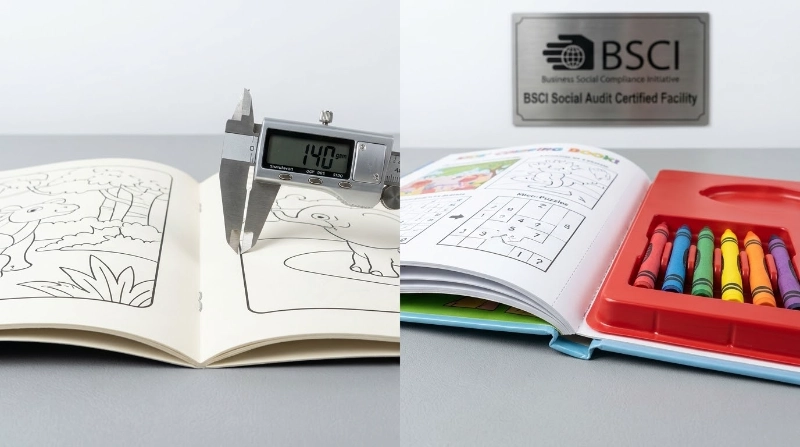
Many intermediaries circulate outdated lab certificates or test "golden samples" made with superior materials not used in mass production. When EU/US customs or Amazon CPC auditors request batch-matched documentation, non-compliant shipments face immediate seizure. Totofish enforces batch-specific traceability, providing real-time SGS, MSDS, and EN71 documentation alongside full BSCI social audit credentials.
Replace Guesswork with Transparent Factory Engineering
A resilient stationery supply chain relies on verifiable material specs rather than opaque pricing. Operating a 12,000+ sqm facility with automated printing and binding lines, Totofish delivers dependable OEM/ODM execution for global brands.
Inspect our manufacturing standards on the Totofish Factory Strength Page, or contact our engineering team today to request complimentary benchmark sample kits!





 Totofish-Thea
 Totofish-Thea