
For global stationery importers, retail category managers, and cross-border e-commerce sellers, the Back-to-School (BTS) season in August and September and the Q4 holiday season are important sales periods for educational stationery and children's creative products. Effective inventory planning and early production scheduling help businesses prepare for seasonal demand while reducing the risk of delayed shipments and excess stock.
However, overseas importers may face late deliveries, inventory shortages, or increased logistics costs when peak-season manufacturing lead times, shipping container congestion, and product compliance testing are not included in the sourcing schedule.
Based on the manufacturing and export experience of its 12,000-square-meter facility, TotoFish (Wenzhou Qide Cultural & Creative Co., Ltd.) outlines a practical production timeline and product planning approach to help international importers coordinate OEM manufacturing, shipping arrangements, and seasonal inventory preparation.
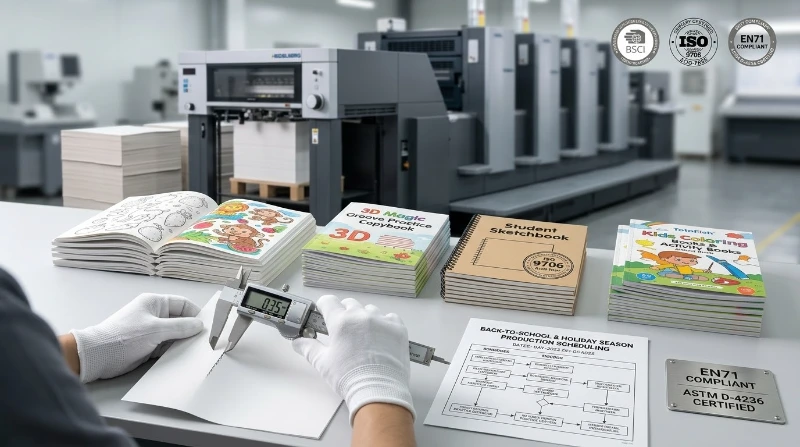
1. Reverse Timeline: Peak-Season Manufacturing Milestones
For products expected to arrive at overseas distribution centers or Amazon FBA warehouses by July or August, sourcing and production planning should generally begin four to five months in advance. The actual schedule depends on product complexity, order quantity, artwork approval, testing requirements, and shipping destination.
1.1 March – April: Product Specification Finalization and Prototyping
The first stage is to confirm product specifications before mass production. This includes multilingual vector layouts, cover artwork, paper grammage, page count, binding structure, packaging dimensions, and other customized requirements.
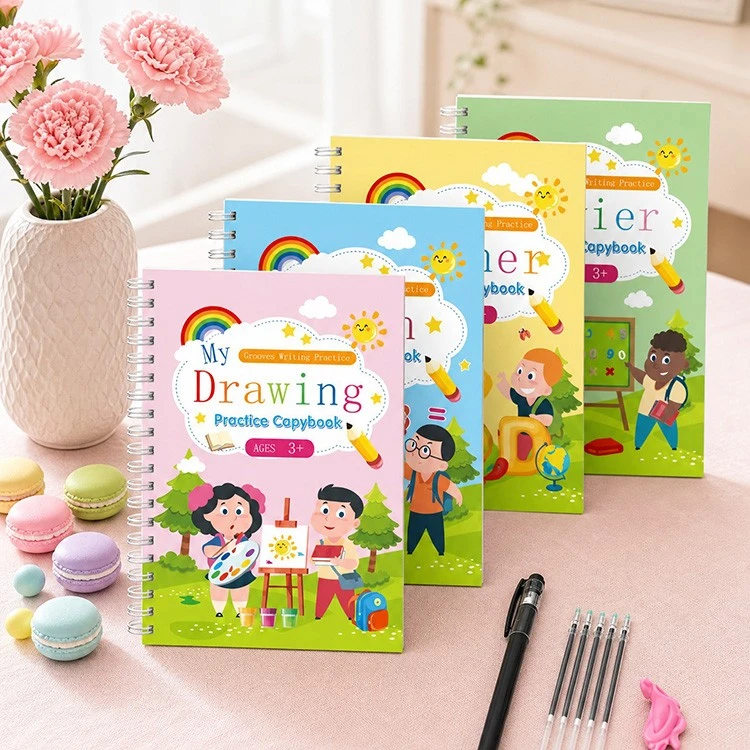
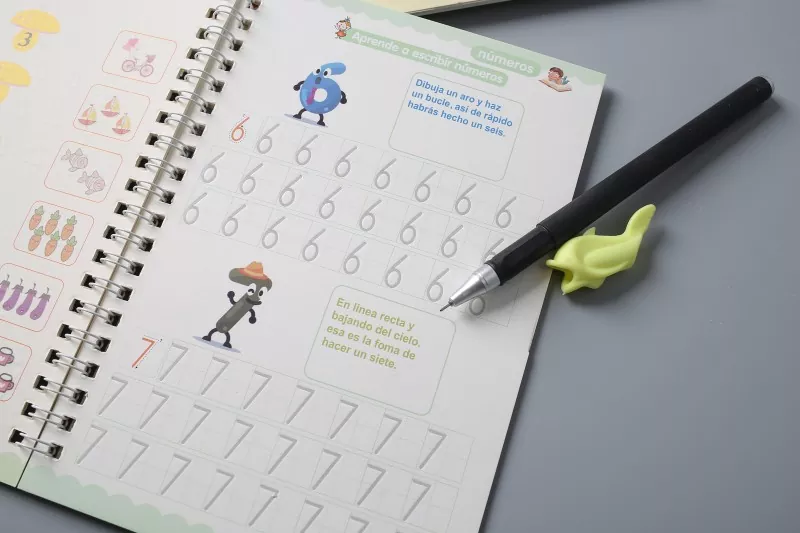
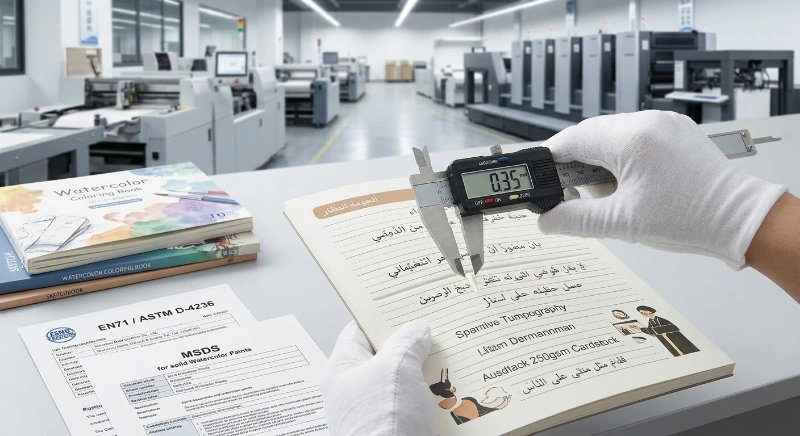
Totofish's reference sample development lead time is 3–5 days, subject to product complexity and artwork confirmation. For 3D magic groove copybooks, the sample review can include the specified 0.35mm groove depth and the stiffness and surface quality of 250gsm–300gsm virgin white cardstock.
Approving samples and artwork at this stage helps reduce changes during mass production and gives the factory sufficient time to prepare materials and production arrangements.
1.2 May: Chemical Compliance and Laboratory Testing
Before mass production, applicable product safety and chemical compliance requirements should be confirmed. Depending on the product type and destination market, testing may cover disappearing inks, watercolor pigments, printing inks, paper materials, and other components that may come into contact with children.
Totofish uses soy-based printing inks and can coordinate relevant product documentation and testing according to project requirements. Documents such as MSDS and applicable EN 71-3 or ASTM D-4236 test reports should be reviewed against the actual materials, product configuration, and destination market requirements.
Completing the required testing before shipment helps reduce the risk of customs delays and documentation issues. Importers should confirm the applicable standards and testing scope with their compliance teams or appointed testing laboratories before production begins.
1.3 June: Mass Offset Printing and Binding
After sample approval and material preparation, mass production can be scheduled on the factory's Heidelberg 5-color offset presses. Binding and packaging arrangements should be determined according to the product format, sales channel, and shipping requirements.
Amazon and E-Commerce Products: For kids coloring books, saddle stitching and Wire-O spiral binding can be considered according to page count, product dimensions, and usage requirements. Packaging dimensions and carton weight should also be reviewed to support efficient storage and fulfillment planning.
Retail and Gift Products: For mess-free watercolor coloring books, customized hardcover sets, brush compartments, and perforated pages can be considered according to the product design. These options provide different packaging and presentation formats for retail and gift channels.
1.4 July: Final Quality Inspection and Container Loading
Before shipment, finished products should undergo final factory inspection according to the approved samples and order specifications. Inspection items may include printing quality, color consistency, page alignment, binding condition, packaging, carton labels, and order quantities.
Third-party inspection can also be arranged when required by the order or destination market. Once the products pass the agreed inspection procedures, container loading and export documentation can be coordinated.
For ocean freight, a 30–45 day transit planning buffer may be used as an initial reference. Actual transit time varies according to the shipping route, carrier schedule, port conditions, customs procedures, and destination delivery arrangements. Importers should confirm the latest shipping schedule with their freight forwarders.
2. Product Matrix Strategies to Minimize Excess Inventory
Seasonal sourcing involves balancing products with predictable year-round demand and products designed for specific holiday or school-season sales periods. A carefully planned product mix can help reduce the risk of excess inventory while maintaining sufficient stock for important retail windows.
2.1 Evergreen Products for Consistent Demand
Products with year-round educational and creative applications can form the foundation of a seasonal inventory plan. Student sketchbooks and drawing pads are suitable examples because they can be used for school activities, home learning, illustration, and everyday drawing.
For projects requiring long-term paper stability, acid-free paper options can be specified according to the relevant paper standard, including ISO 9706 where applicable. These products can be included in regular replenishment plans, helping importers maintain inventory beyond the Back-to-School and holiday periods.
2.2 Seasonal Gift Sets for Q4 Demand
Gift-oriented products can be included in Q4 inventory planning to complement standard stationery products. Paint-with-water kits, watercolor coloring books, and customized activity sets can be developed with different page formats, accessories, and packaging structures.
For holiday collections, importers can consider gift boxes, built-in brush compartments, coordinated product sets, and customized cover artwork. The final product configuration should be based on target retail pricing, packaging costs, shipping dimensions, and the expected sales channel.
2.3 Balance Product Variety with Inventory Requirements
When preparing a seasonal product assortment, it is important to evaluate the relationship between order quantities, product variations, and production requirements. Too many customized versions may increase artwork approval time, material preparation, and inventory management complexity.
Importers can simplify production planning by grouping products with similar paper specifications, printing requirements, or binding structures. This allows the production schedule to be organized more efficiently while maintaining the necessary product differences.
3. Totofish Peak-Season Capacity and Production Lead Times
During the May–August production period, early capacity planning is important for stationery manufacturers and overseas importers. Confirming order specifications and production schedules in advance helps coordinate raw material preparation, printing, binding, packaging, and shipment arrangements.
3.1 Production Capacity Allocation
Totofish operates a manufacturing facility covering more than 12,000 square meters, with a reported monthly output exceeding 2,000,000 units. The facility is equipped with Heidelberg 5-color offset printing presses and production equipment for children's educational paper products.
For confirmed OEM orders, production scheduling can be coordinated according to order quantity, product specifications, artwork approval, material availability, and factory capacity. The reference mass production lead time is 15–20 days, with actual delivery schedules confirmed after order details are finalized.
3.2 Carton and Container Optimization
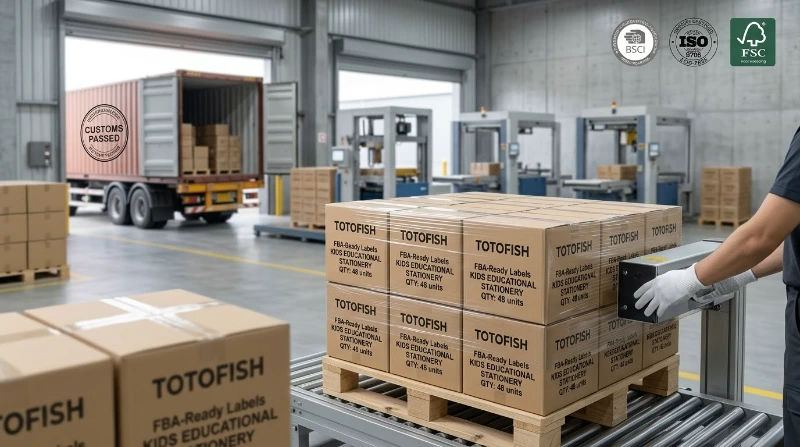
Packaging dimensions influence carton quantity, pallet arrangement, container utilization, and freight cost per unit. During product and packaging development, carton size and packing methods should be reviewed together with the finished product dimensions.
Totofish can coordinate packaging specifications and carton arrangements during order preparation. For larger shipments, importers can work with packaging and logistics teams to review pallet configurations, loading plans, and container capacity before dispatch.
Efficient packaging planning can help reduce unused container space and improve the relationship between product volume and shipping cost. However, the final loading arrangement depends on carton dimensions, stacking limits, product protection requirements, and transportation conditions.
4. Key Factors for Managing an Overseas Stationery Supply Chain
Seasonal sourcing requires coordination between product development, manufacturing, quality inspection, export documentation, and international logistics. Managing these stages as one connected process helps reduce avoidable delays and provides better visibility into the order schedule.
4.1 Confirm Product Specifications Before Ordering
Before placing an OEM order, confirm the paper weight, material type, page count, printing colors, binding method, product dimensions, packaging details, and required compliance documents. Complete specifications reduce the likelihood of repeated revisions after production has started.
4.2 Approve Samples and Artwork in Advance
Sample approval and artwork confirmation should be completed before the scheduled mass production date. Changes to cover design, language versions, paper materials, or binding structures may affect production preparation and delivery timing.
4.3 Coordinate Compliance and Shipping Documents
Product testing and export documentation should be included in the sourcing schedule rather than handled only when the goods are ready to ship. Importers should confirm the required test reports, product labels, carton markings, commercial documents, and destination-specific requirements in advance.
4.4 Maintain a Realistic Shipping Buffer
International shipping schedules can change due to port congestion, carrier adjustments, customs procedures, and inland transportation arrangements. A realistic shipping buffer helps reduce the impact of unexpected delays. Importers should use current freight schedules when setting warehouse arrival dates and replenishment deadlines.
5. Partner with an Audited OEM Stationery Manufacturer
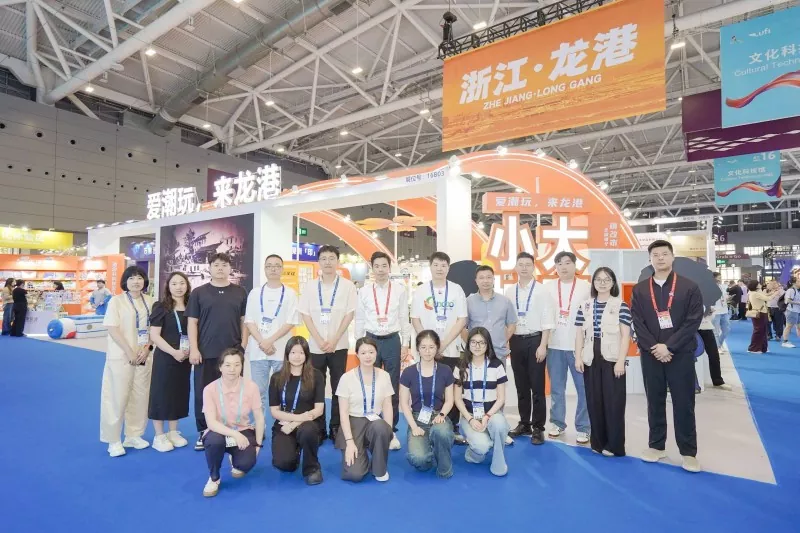
In international stationery supply chains, production consistency and delivery coordination are important factors in seasonal sourcing. TotoFish (Wenzhou Qide Cultural & Creative Co., Ltd.) has more than 15 years of manufacturing experience in children's educational paper products and creative stationery supplies.
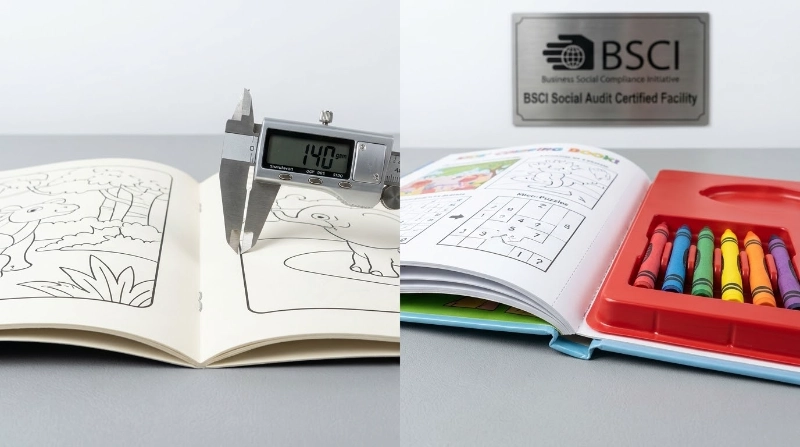
With a manufacturing facility covering more than 12,000 square meters, monthly output exceeding 2,000,000 units, and Heidelberg offset printing equipment, TotoFish supports customized OEM and ODM production for international stationery brands and distributors. The factory also operates under BSCI social audit certification.
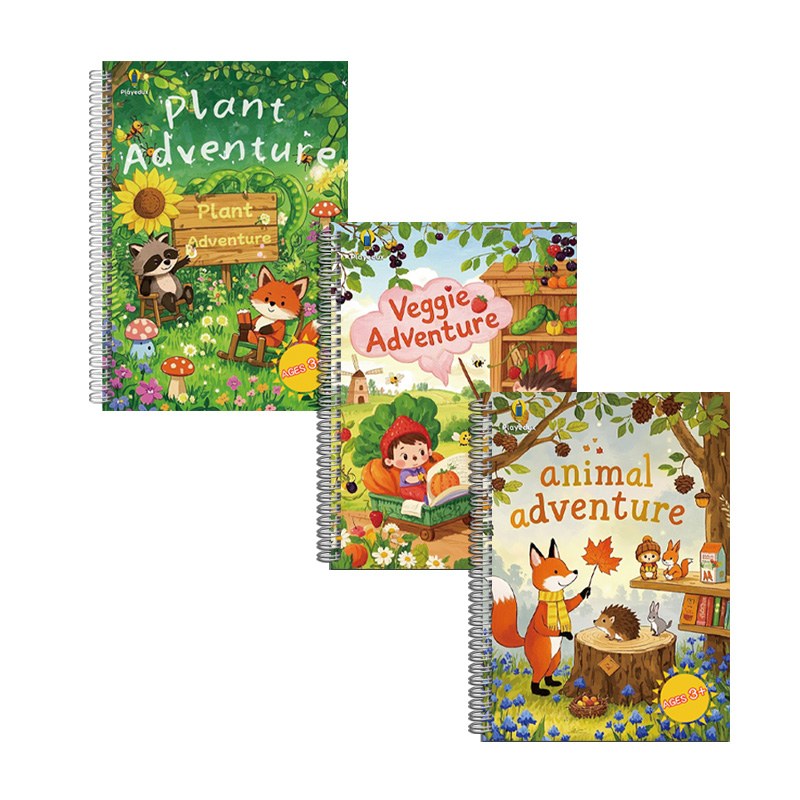
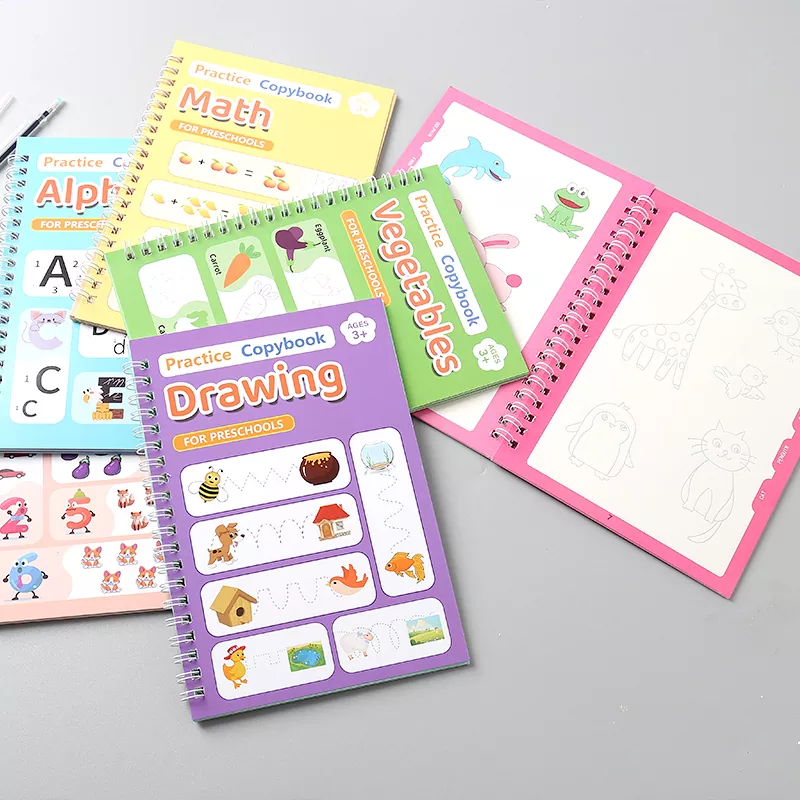
Our product range includes 3D magic groove copybooks, mess-free watercolor coloring books, student sketchbooks, drawing pads, children's coloring books, and activity pads. Different paper specifications, printing methods, binding structures, and packaging options can be discussed according to product requirements.
Whether you are preparing for the Back-to-School season or planning Q4 holiday inventory, early communication about product specifications, sample approval, order quantity, testing requirements, and delivery dates helps establish a more manageable production schedule.
Visit our Totofish Factory Strength Page to learn more about our manufacturing facilities and production capabilities, or contact our team to discuss OEM product development, request samples, and reserve production capacity for your upcoming seasonal orders.